Construction Engineering and Inspection
Raba Kistner has provided successful construction project administration and coordination for clients throughout the Southwestern United States and beyond since 1968.
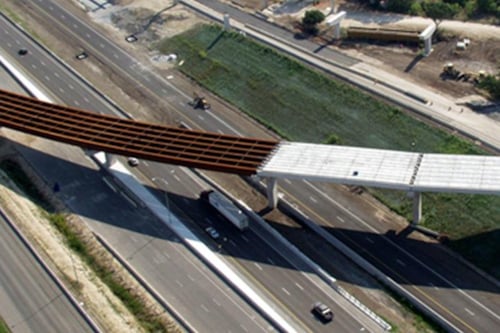


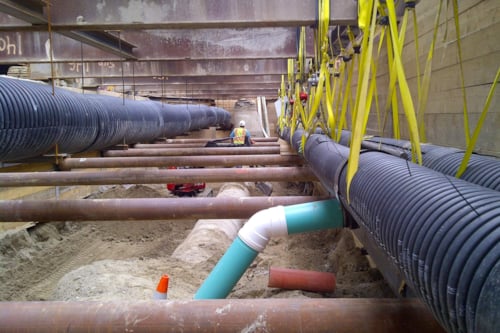
Kiwa evaluates the viability, constraints, and strategic considerations involved in developing or modifying infrastructure, industrial facilities, utilities, and energy systems. Our teams assess technical feasibility, site conditions, regulatory pathways, operational impacts, and long-term risk exposure.
We integrate engineering insight, environmental understanding, geotechnical data, and operational expertise to identify project risks early, confirm assumptions, and provide actionable recommendations. Kiwa’s analyses support decision-making related to alignment alternatives, site suitability, environmental considerations, constructability, service continuity, and lifecycle performance expectations.
Major infrastructure and industrial investments carry significant financial, regulatory, and operational risk. Unexpected conditions, misaligned assumptions, or overlooked constraints can lead to cost overruns, schedule delays, unsafe designs, and long-term performance issues. A well-structured feasibility and risk assessment helps organizations:
Independent evaluation provides confidence to owners, regulators, and stakeholders.
Kiwa delivers value through its multidisciplinary engineering and consulting expertise. Our teams combine geotechnical specialists, environmental scientists, asset integrity experts, and construction consultants to produce comprehensive feasibility and risk assessments grounded in real-world conditions.
Kiwa’s independence ensures the evaluation is unbiased, focused solely on delivering the most accurate understanding of project challenges and opportunities. Our findings are clearly documented and structured to guide project teams in selecting the most viable paths forward, mitigating risks early, and developing strategies that support reliable and cost-effective project delivery.
A feasibility assessment typically examines technical constraints, regulatory pathways, environmental considerations, site conditions, constructability, cost implications, and long-term operational needs.
It is most effective early in planning—before designs advance—to identify constraints and risks that may affect cost, schedule, or performance.
Yes. Kiwa frequently serves as an independent evaluator to validate assumptions and identify risks not captured in design-phase analyses.


