Decarbonisation Scan
Is your company ready to act? The Energy Scan provides insight into opportunities to streamline your energy consumption and transition to sustainable energy sources, helping your business achieve its climate goals.


Is your company ready to act? The Energy Scan provides insight into opportunities to streamline your energy consumption and transition to sustainable energy sources, helping your business achieve its climate goals.
If you manufacture pressure equipment for the European market, compliance with the Pressure Equipment Directive (PED) 2014/68/EU is mandatory. This EU directive requires that all pressure equipment operating above 0.5 bar is CE marked—proving it meets essential safety requirements and can be legally sold across the European Economic Area (EEA). As an independent Notified Body, Kiwa offers complete conformity assessment and certification services under PED 2014/68/EU. We support manufacturers throughout the certification process to ensure equipment meets the applicable design, manufacturing, and testing standards.
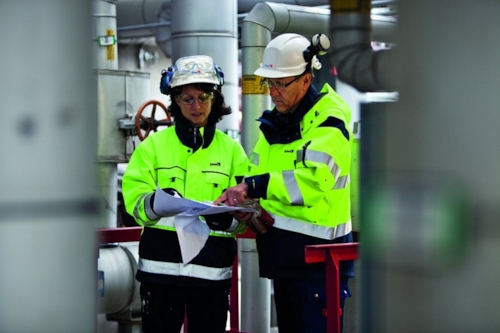
If your organization works with gases, it may be important to know their calorific value or Wobbe Index. In addition, it's crucial that the gas does not contain harmful trace components. At Kiwa, you can rely on expert analysis of a wide range of gas properties: volume, quality, (main) components, higher hydrocarbons, aromatic hydrocarbons, halogenated hydrocarbons, sulfur compounds (such as H₂S), siloxanes and THT odorization.
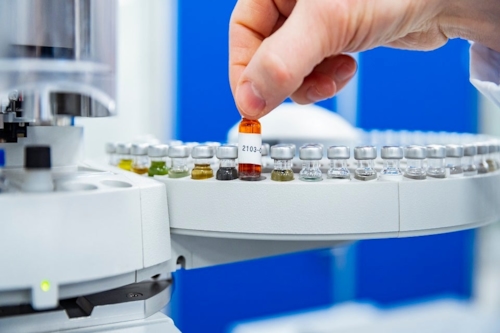
Do you want to demonstrate that your gas distribution or installation materials are suitable for hydrogen? With certification according to AR 214, you can show that your products can be safely used for hydrogen blending in natural gas as well as for the full use of hydrogen gas. Kiwa developed the approval requirement AR 214 as an addition to the GASTEC QA quality mark. In doing so, Kiwa responds to the growing role of hydrogen in the energy transition and the need to make existing gas infrastructures suitable for new energy carriers.

Hydrogen will play an important role in the automotive sector as an alternative fuel for vehicles. Hydrogen cars produce no CO₂ emissions, only water vapor, have a long range and can be refueled quickly. Manufacturers of hydrogen tanks and components are currently setting up mass production. For this purpose metallic materials have to be tested to demonstrate safe use with hydrogen.

Natural gas, hydrogen gas and many other gases are naturally odorless. This can cause dangerous situations, for example if a leak or other incident occurs. Gases that are distributed via the Dutch gas network must therefore be scented with a so-called odorant.

Kiwa offers testing and development services of automotive components for LPG, CNG, LNG and hydrogen, as well as cyclic and climatic tests. We mainly test pressurized components and electronics.

The transition to a more sustainable energy system is accelerating, with alternative fuels playing a key role in reducing emissions and dependence on fossil energy sources. Kiwa carries out feasibility studies to help gas traders, fleet owners and governments simplify investments, improve safety and gain insight into the potential of alternative fuels such as CNG, LNG, H2, and CH.

Network design for new areas or minor adjustments to existing networks is a determinant factor in the relationship between your investment costs and delivery reliability. You don't want to lay a large amount of pipeline capacity unnecessarily, but you do want to build in sufficient redundancy.

Irene Pro is a comprehensive and user-friendly analysis and calculation solution for gas networks. Developed by Kiwa, Irene Pro serves as an essential tool for numerous network operators in the construction, management and maintenance of gas networks.

✓ One-stop-shop: knowledge of all sustainable energy solutions under one roof
✓ Proven quality for testing, certification and training
✓ Independent advice and assessment
✓ Concrete innovation steps with a tailored approach
✓ Quick action with our clear vision on the energy transition
A joint in a plastic piping system made of, for example, polyethylene (PE) must function reliably for many years, often under high pressure and in critical applications such as drinking water and gas networks. Therefore, it is essential to accurately assess the quality of these joints.

Sometimes liquids occur unintentionally in the gas distribution network. These include, for example, condensed gases from the gas network, often referred to as ‘natural gas condensate’. Liquids in the gas network can be harmful to both human health and the environment. Therefore, correct procedures for removing these liquids are essential. The procedures depend on the type of liquid, which cannot always be determined by visual inspection. Fortunately, there is a solution: infrared spectroscopy (FTIR). This measurement method makes it possible to identify the type of liquid.

At the request of Dutch drinking water company Vitens, Kiwa conducted an energy and decarbonization scan for Spannenburg, the largest drinking water production site in the Netherlands. The scan provides insight into Spannenburg’s energy consumption and explores possible measures to make the site more sustainable. The results provide building blocks for further steps towards reducing CO2 emissions.

The energy transition is leading to a growing need for excavation work in the Netherlands. The installation, replacement and reinforcement of cables and pipelines increasingly requires work to be carried out underground. Careful excavation is essential, as damage to data cables can disrupt internet, television and telephone services, causing inconvenience for users and costs for companies and society.


